Fresh-food warm, freezer holding
Usually: airflow, evaporator fan, thermistor, damper or condenser load before compressor blame.
Do not: clear alarms or unplug repeatedly before noting temperatures.
Open the not-cooling diagnostic
Ice maker slow or hollow cubes
Usually: fill tube, inlet valve, filter restriction, harvest module or freezer temperature drift.
Do not: force the bail arm or chip ice from the mold.
Check water and ice symptoms
Condensation or frost line
Usually: gasket compression, hinge alignment, panel weight or cabinet reveal issue.
Do not: heat the gasket aggressively or slam panel-ready doors.
Review seal and gasket testing
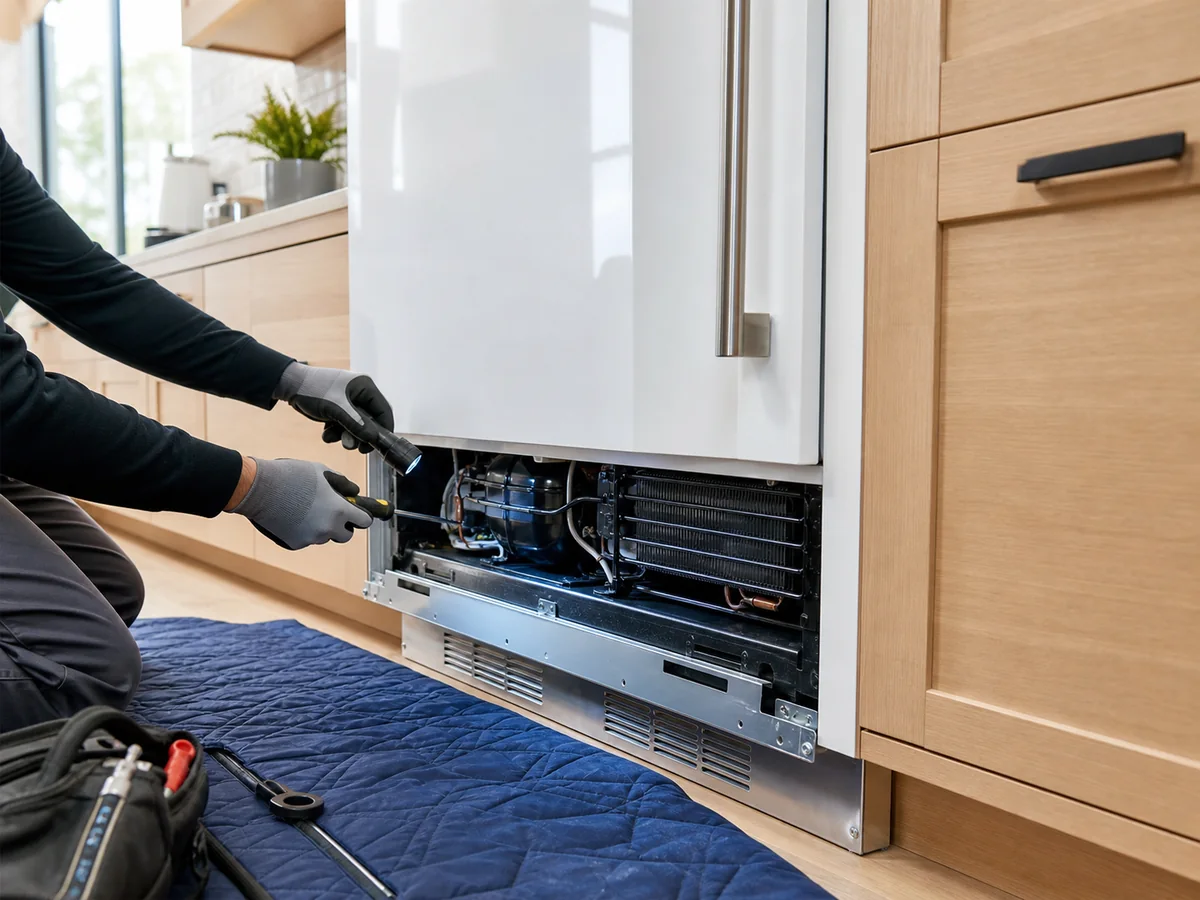
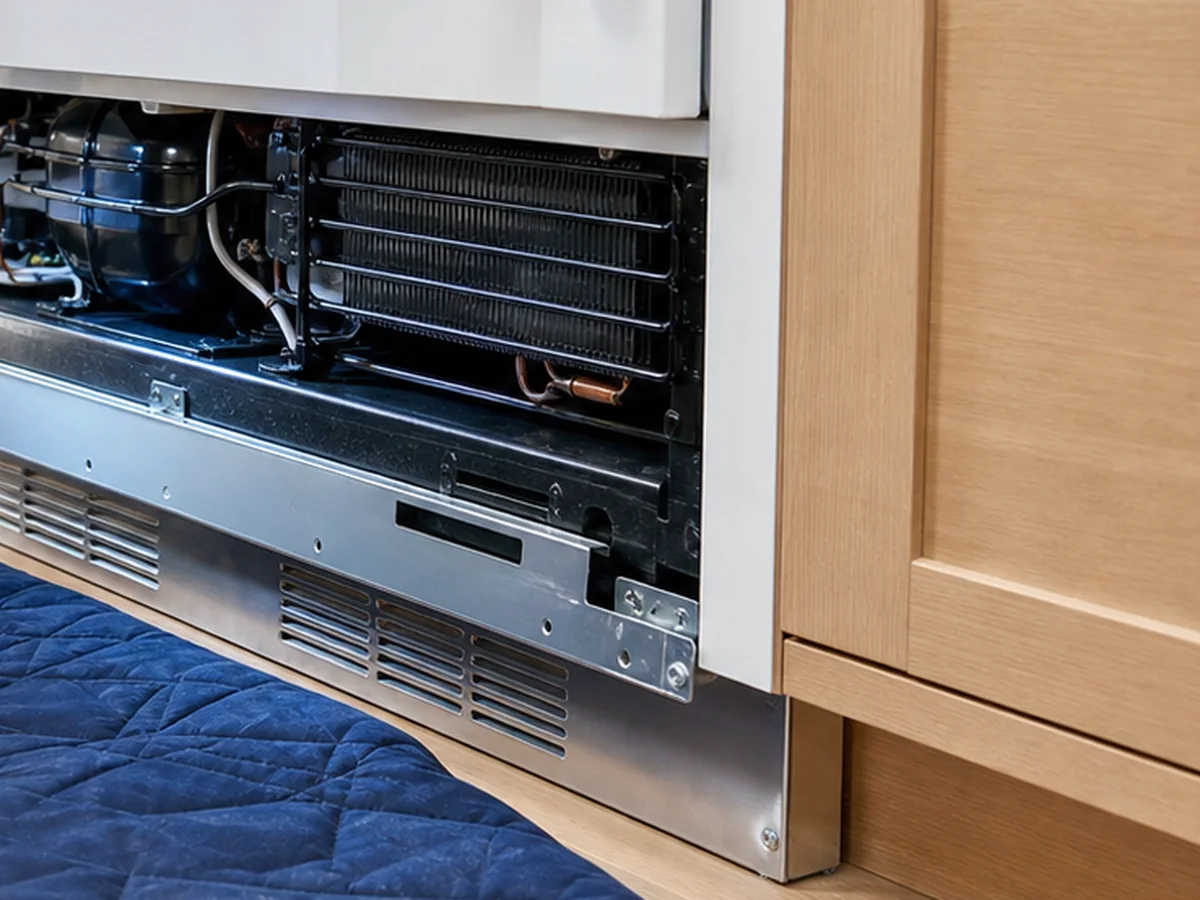
Sealed-system suspicion
Usually: compressor, leak, refrigerant restriction or false positive from airflow and dirty condenser.
Do not: approve compressor work before baseline tests.
Read sealed-system checks
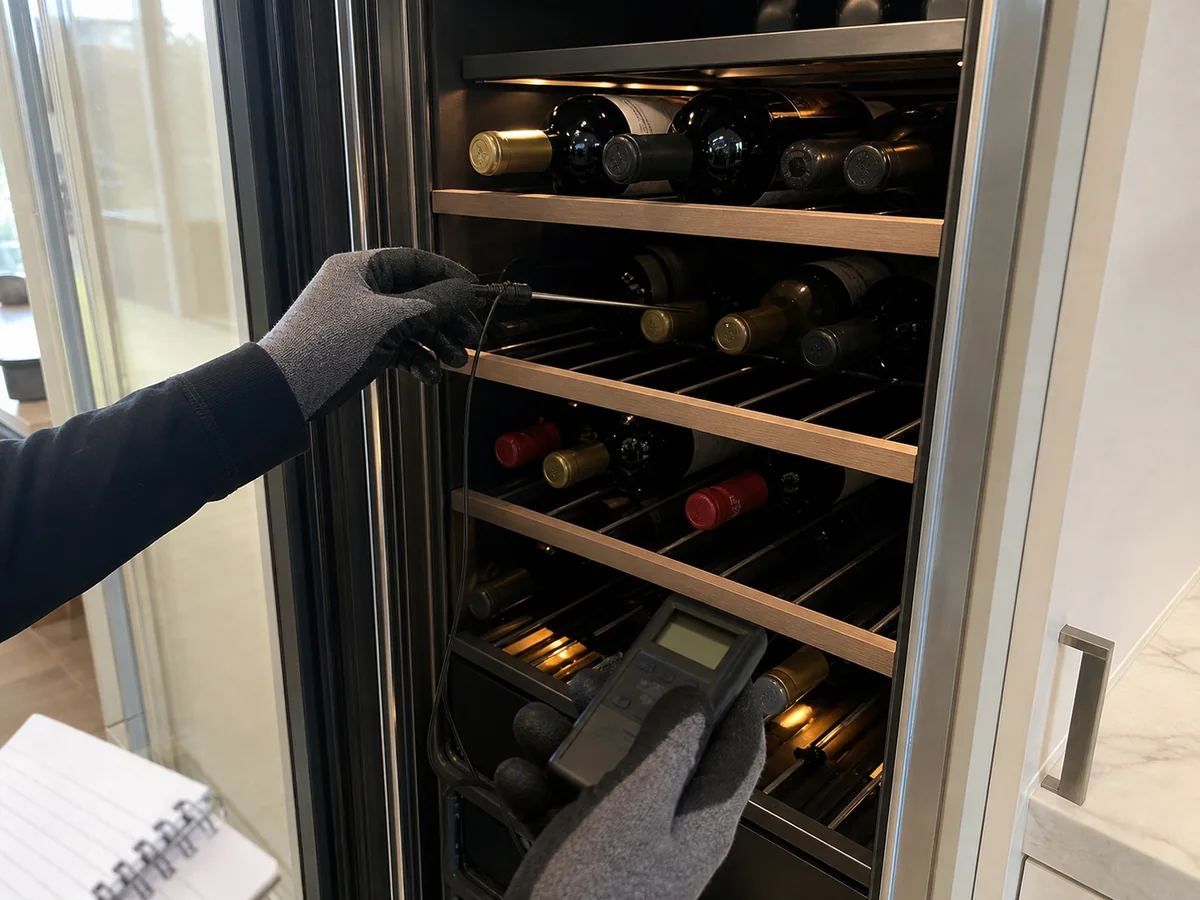
Wine storage drifting
Usually: sensor, fan, door seal, condenser load or control calibration by zone.
Do not: move bottles around without logging zone temperatures.
Stabilize wine storage
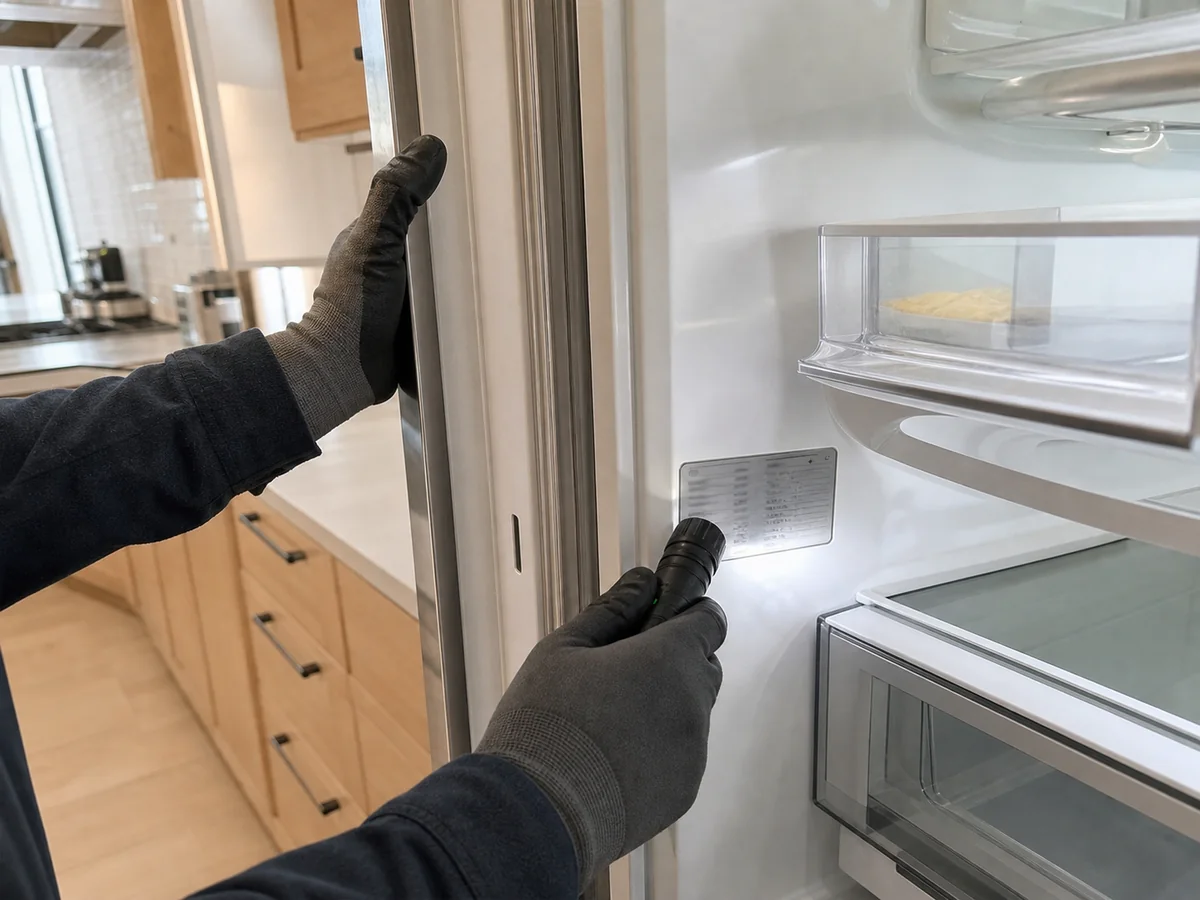
Alarm or service code
Usually: model-specific control behavior, not a universal code chart.
Do not: buy boards online from a code alone.
Interpret alarms safely
Water on the floor or a leak
Usually: a frozen defrost drain, a fill-line or inlet-valve drip, or an overflowing condensate pan rather than refrigerant.
Do not: assume a refrigerant leak or keep mopping without finding the source.
Leaking water / water on the floor
Freezer warm, ice cream soft
Usually: a defrost fault, a stalled evaporator fan or a heat-loaded condenser, often while the fridge still holds.
Do not: approve a compressor before the defrost circuit and fan are checked.
Freezer not freezing
Loud, buzzing or rattling
Usually: the evaporator fan, the condenser fan, a hardened compressor mount or the ice maker on its cycle.
Do not: ignore a new grind or rattle — it often comes before a warm cabinet.
Loud or buzzing