
Symptom guide / Belmont 94002
Sub-Zero leaking water in Belmont? Find where it is coming from
A built-in that leaves a puddle on your Belmont kitchen floor is almost never leaking refrigerant. It is leaking water, and water inside a sealed Sub-Zero comes from only three places: the defrost drain, the fresh-water plumbing that feeds the ice maker and dispenser, or the condensate pan tucked beneath the cabinet. Telling them apart before you book turns a guessing game into a one-trip repair.
4.9/5 · 1,866 verified customer reviews
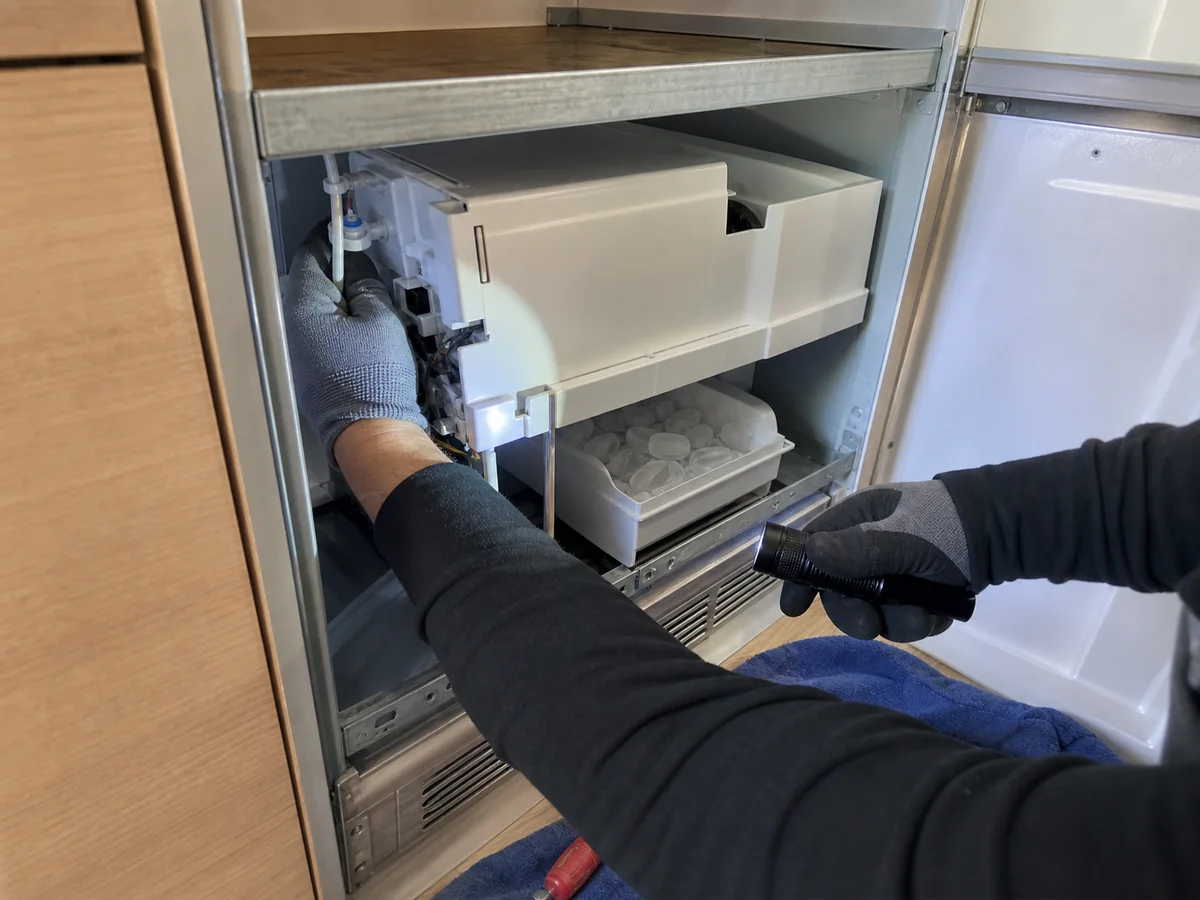
The three places the water is actually coming from
Once you accept that a puddle is plain water, the diagnosis narrows quickly. The first and most frequent source is the defrost drain. Every built-in periodically melts the frost off its evaporator and routes that meltwater down a pencil-thin tube to a pan near the compressor, where the heat of the machine evaporates it. When that little tube ices shut, the next defrost cycle has nowhere to send its water, so it backs up, freezes into a tray of ice at the freezer floor, and eventually spills over the threshold and out the door.
The second source is the fresh-water plumbing — the inlet valve at the back, the fill tube that feeds the ice mold, the dispenser line, and the saddle valve out under the sink. A pinhole at a compression fitting or a fill tube that has split from years of cold flexing will weep steadily, and because the line runs along the cabinet base, the water shows up at the front toe-kick rather than where it actually started.
The third is the condensate pan and overflow itself. A cracked pan, a pan that has shifted off its rail during a past service, or a condenser fan no longer drying the pan fast enough will let collected water brim over instead of evaporating. This one is quieter and slower, and it is the source people most often miss because nothing inside the cabinet looks wrong.
Why the Sterling Downs flats see drain trouble first
Belmont is really two towns stacked on one hillside, and water problems sort themselves by elevation. Down in the Sterling Downs flats, on the low streets near US-101 and the Bay margin, the ground sits damp and the marine layer lingers well past midday. That standing humidity is the exact load a defrost drain has to carry, so frozen and overflowing drains turn up here first and worst, especially through the wet season. Many of these are mid-century ranch homes built on a concrete slab, which means a leak does not soak away — it spreads across the slab and surfaces at the toe-kick, sometimes a full cabinet away from the refrigerator.
Because the flats sit on slab, a leak you catch early is a mop-up; one you ignore wicks into the kick boards and the bottom rail of the cabinetry. That is why the timing check below matters so much down here: a drip that returns on the defrost rhythm is telling you the drain is the culprit before any water ever reaches the wood.
Hillside homes hide the same leak differently
Climb west toward Carlmont, the Hallmark streets, and the Belmont Heights ridge and the housing changes to crawlspace construction and custom remodels. Up here a leak rarely pools in plain sight. Instead the water tracks under the finished flooring or down into the crawlspace, so the first sign is often a warped plank or a musty note rather than a puddle. In the panel-ready, millwork-wrapped kitchens common to these hillside rebuilds, the refrigerator is boxed so tightly that you cannot see the pan or the rear line without pulling the unit, which makes the four-step check below the safest way to gather evidence before we arrive.
A four-step check before you book
- Pull the lower grille and look for ice. Slide the kick plate off at the toe-kick and look at the back floor of the freezer compartment. A flat sheet of ice or a frost ridge at the rear drain is the single most common cause of a Belmont leak — the defrost drain has frozen and the meltwater has nowhere to go but over the lip and onto your floor.
- Find where the puddle starts. Dry the floor, then lay a paper towel along the front edge and a second one down one side. Whichever towel wets first tells you a lot: a front leak points to the door, the dispenser, or an overflowing condensate pan, while a leak that begins at the rear or a side points to the drain or the supply line.
- Trace the water line to the shutoff. Follow the copper or poly tube back to the saddle valve, usually under the kitchen sink or in the cabinet beside the unit. A damp compression fitting, a bead of water on the valve, or green corrosion means the leak is plumbing, not the refrigerator itself.
- Time the drip before you call. Note whether the puddle returns on a rhythm or stays constant. Water that reappears every few hours, roughly on the defrost cycle, points to a blocked drain; a steady trickle that never stops points to the inlet valve or a split line. Writing this down lets us bring the right parts on the first trip.
What we do on the visit
On site we confirm the source rather than assume it. We pull the lower grille, check the pan and the condenser fan, and test the defrost drain by flushing it and watching whether it clears. If the drain is the problem we clear the ice, verify the heater and thermistor that should have prevented the freeze-up, and where the design allows we fit the drain improvement that keeps it from re-icing. If the trail leads to plumbing, we pressure-check the inlet valve and the fill tube and inspect the saddle valve you flagged. The goal is that the puddle and its cause both leave with us, documented, so it does not return next month.
The diagnostic visit is $89 and is credited toward the repair once you approve it. Most leak repairs are part-level — drain, fill tube, or inlet valve work — and land well below a major cooling job. If you want the planning ranges by job type first, the Belmont Sub-Zero repair cost guide lays out what each repair runs in 94002.
Where to go next
If the leak comes with hollow cubes or a slow ice maker, the water path is the common thread — see the ice maker and water-line guide. If the freezer is also running warm, the defrost fault may be bigger than the drain; read freezer not freezing in Belmont. To find the model and serial we will ask for, use the model tag and parts guide, check any display warning against the error codes and alarms guide, or start at the Belmont Sub-Zero repair hub. For seasonal upkeep that keeps drains clear, the fall maintenance guide is the place to begin.
Leaking-water questions from Belmont owners
Is a leaking Sub-Zero an emergency I should unplug?
It is water, not refrigerant, so there is no health hazard, but standing water near a built-in's electrical and under hardwood or stone flooring is worth acting on quickly. If the puddle is large or reaching cabinetry, turn off the saddle valve under the sink to stop any supply-side leak, mop the floor, and book a visit. You do not need to unplug the unit unless water is reaching the outlet.
Can I keep using the refrigerator while I wait for service?
Usually yes. A frozen defrost drain or a slow fill-line drip will not spoil food, so you can keep the doors closed and wipe the floor as needed. The one exception is a steady supply-line leak you cannot isolate at the saddle valve — in that case shut the household water if you must leave the house unattended.
How much does a leaking-water repair cost in Belmont?
Most leak repairs are part-level work. Clearing and re-routing a frozen defrost drain or replacing a fill tube or inlet valve typically lands in the $230 to $520 range, while a cracked drain pan or dispenser line can run higher. The $89 diagnostic is credited toward the repair once you approve it, so the on-site test is not money lost.
Why does my Sub-Zero leak more in the foggy winter months?
Belmont's wet-season marine layer keeps indoor humidity high, and that extra moisture is exactly what the defrost system has to drain away. When the small drain line at the back of the freezer ices over, the heavier winter condensate load overflows sooner. Homes in the Sterling Downs flats near US-101 feel this first because the damp Bay air settles there longest.
I changed the water filter and now it leaks — are they related?
Often, yes. A filter that is not seated fully, or an O-ring pinched during the swap, will weep at the housing and pool under the unit within a day. Re-seat the filter firmly until it clicks and check again. If it still leaks at the head, the housing or its seal needs attention rather than another filter.
There is a wall of ice at the back of the freezer — is that the same problem?
It is the upstream half of it. A defrost fault lets frost build into a slab on the rear evaporator wall; as it partially melts, the water overruns a drain that cannot keep up and ends up on the floor. We test the defrost heater, the thermistor, and the drain path together so the ice and the puddle are both resolved, not just mopped up.
Tell us where the water shows up and whether it returns on a rhythm, and we will bring the drain, fill-line and pan parts to settle it in one visit. Same-day service is available when route capacity and parts allow.