
Symptom guide / Belmont 94002
Sub-Zero making noise in Belmont? What each sound means
A built-in that has started buzzing, humming louder, rattling, or vibrating is usually telling you which part is tired — and the location of the sound is the clearest clue. High and inside the cabinet points at the evaporator fan; low and behind the grille points at the condenser fan or the compressor; a noise on a schedule is the ice maker. Reading it early often means a fan or a mount, not a cooling failure.
4.9/5 · 921 verified customer reviews
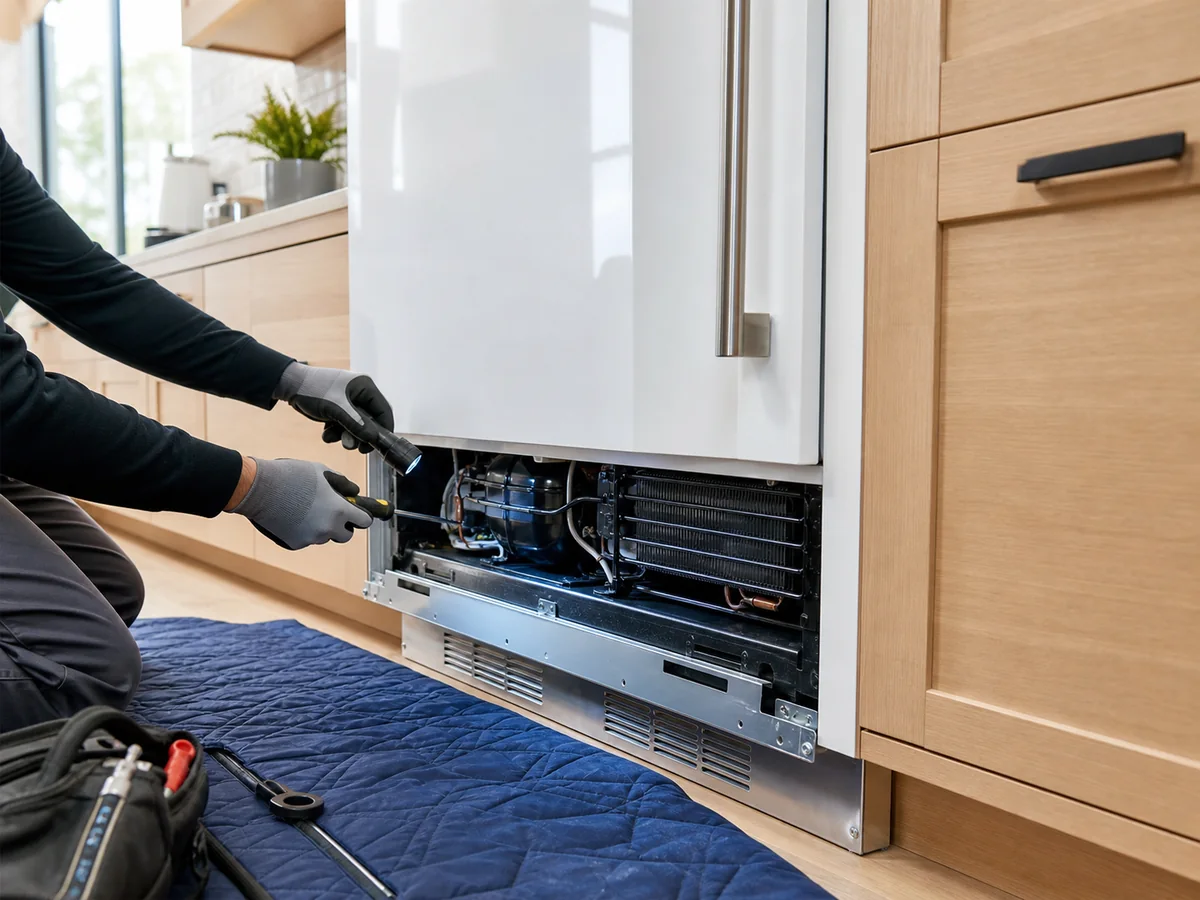
Which noise points to which part
A refrigerator has only a handful of moving parts, so the sound it makes is a short list of suspects. The evaporator fan sits high, behind the rear interior panel of the freezer or fridge; when its bearing wears or a blade clips a ridge of frost, it produces a whirring, grinding, or ticking that seems to come from inside the food space. The condenser fan lives down behind the lower grille; a worn one gives a deeper hum or a rattle from the base of the unit. The compressor, also at the base, normally hums quietly, but as its rubber mounting grommets harden with age it can buzz and pass vibration into the floor. And the ice maker announces itself on a schedule — a fill, a whir, then a clatter as the cubes drop.
Matching the character of the sound to its location does most of the diagnostic work. A high whir is rarely the compressor; a base buzz is rarely the evaporator fan. The few minutes you spend placing the noise save a wrong-part conversation later.
Normal sounds, and the ones to act on
Built-ins are not silent, and a long list of sounds are simply the machine working: a soft compressor hum, the low whir of fans, gurgling and the occasional pop as refrigerant flows and metal expands and contracts, and a clunk when ice is harvested. None of those need attention. What earns a service call is anything new and mechanical — a grind, a persistent rattle or buzz, a squeal, or a vibration you can suddenly feel through the cabinetry. Those do not resolve themselves; they get louder, and they often arrive ahead of a temperature problem.
When a noise is really a heat warning
The reason a sound is worth chasing is that two of these parts keep the unit cold. The evaporator fan moves chilled air through the compartments; when it grinds toward failure, airflow falls and the box drifts warm even while the compressor runs. The condenser fan lets the system shed heat; a weak one makes the whole machine run hotter and longer. So a rattle you ignore in spring can become a warm-fridge call in summer. Treating the noise early usually keeps it to a fan motor rather than a cascade of related faults.
Why a quiet Belmont hillside makes it obvious
Where you live changes how soon you hear it. On the quiet, wooded streets climbing toward Water Dog Lake and along the Belmont Heights ridge, there is almost no ambient noise to cover a refrigerator, so a failing fan or a buzzing compressor mount stands out here long before a homeowner down on the busier flats would catch it. The hillside rebuilds compound it: a built-in framed into custom millwork and stacked beside a wine column transmits even a small imbalance straight into the woodwork, so a minor vibration reads as a major one. That sensitivity is an advantage — it brings the problem to your attention while the repair is still small.
Quick checks before you book
A few safe checks help us arrive ready. Stand close and decide whether the sound is high inside the cabinet or low at the grille. Pull the lower grille and look for dust packed into the condenser or pet hair around the fan, which causes both noise and heat. Confirm whether the noise tracks the ice maker's fill-and-drop cycle. And press a hand gently on the cabinet side to feel whether the vibration is coming from the unit or from a panel resonating against it. Note what you find, but do not remove interior panels or reach into the fan — leave that to the visit.
What we do, and where to go next
On site we locate the source by sound and by hand, confirm it under power, and replace or re-secure the part — most often a fan motor or compressor mount. The $89 diagnostic is credited toward the repair you approve. If the noise already came with warming, pair this with not cooling in Belmont or freezer not freezing. If a display warning is showing too, the error codes and alarms guide helps; to find the model and serial we will ask for, use the model tag and parts guide. For planning ranges by job, see the Belmont Sub-Zero repair cost guide or start at the repair hub. A noisy wine column has its own guide: wine cooler repair in Belmont.
Noise questions from Belmont owners
Which Sub-Zero noises are normal and which are not?
Normal sounds include a soft hum from the compressor, a low whir from the fans, occasional gurgling or popping as refrigerant moves and parts expand, and a clunk when the ice maker drops a harvest. What is not normal is a loud grinding, a sharp rattle or buzz that comes and goes, a squeal, or a new vibration you can feel through the floor or the cabinetry. Those are mechanical and worth a look before they turn into a temperature problem.
Where in the unit is the sound usually coming from?
Sound from high inside the cabinet, behind the rear interior panel, is almost always the evaporator fan. Sound from low and behind the lower grille is the condenser fan or the compressor. A periodic noise on a schedule is the ice maker's fill and harvest. Standing the sound up against its location is the fastest way to narrow which part is involved.
Can a noisy fan actually warm the refrigerator?
Yes, and that is the reason not to ignore it. The evaporator fan circulates cold air through the box; if it is grinding toward failure or stalling, airflow drops and the compartment drifts warm even though the compressor still runs. A failing condenser fan lets the system overheat and lose efficiency. A noise is often the early version of a cooling complaint, which is why catching it early is cheaper.
My built-in buzzes loudly for a minute then settles — is that a fault?
A short buzz at start-up as the compressor and fans spin up can be normal, especially on older units. A buzz that is new, louder than it used to be, or lasts well beyond start-up usually means a fan blade is contacting frost or debris, a mounting grommet has hardened, or the compressor is laboring. If it pairs with any temperature drift, treat it as a service item rather than a quirk.
Why does the noise seem worse in our quiet hillside kitchen?
It is not your imagination. On the quiet wooded streets above Water Dog Lake and through the Belmont Heights ridge, there is little background noise to mask a refrigerator, so a failing fan or a tired compressor mount is obvious here long before a flatland owner near the freeway would notice it. In the custom millwork of a hillside rebuild, vibration also telegraphs through the cabinetry and the wine racks, which makes a small imbalance feel much louder.
How much does it cost to fix a noisy Sub-Zero in Belmont?
Most noise repairs are part-level. An evaporator or condenser fan motor typically runs in the $190 to $640 range, and re-securing or replacing worn compressor mounts is on the lower end of that. The $89 diagnostic is credited toward the repair once you approve it, so identifying the exact source is not a sunk cost.
Tell us whether the sound is high in the cabinet or low at the grille and whether anything has warmed, and we will arrive ready to find it. Same-day service is available when route capacity and parts allow.