
Sub-Zero Undercounter Drawer Not Cooling in Belmont: Myths vs. Reality
Why a Sub-Zero 700-series undercounter drawer runs warm or frosts up in Belmont — airflow, gasket, or evaporator fan — and what each repair really costs.
Read the guide →Wolf guide · 5 min read
A Wolf wall oven or range that cooks faster or slower than the dial is usually calibration or a tired sensor — not a dead control board. A Belmont guide.
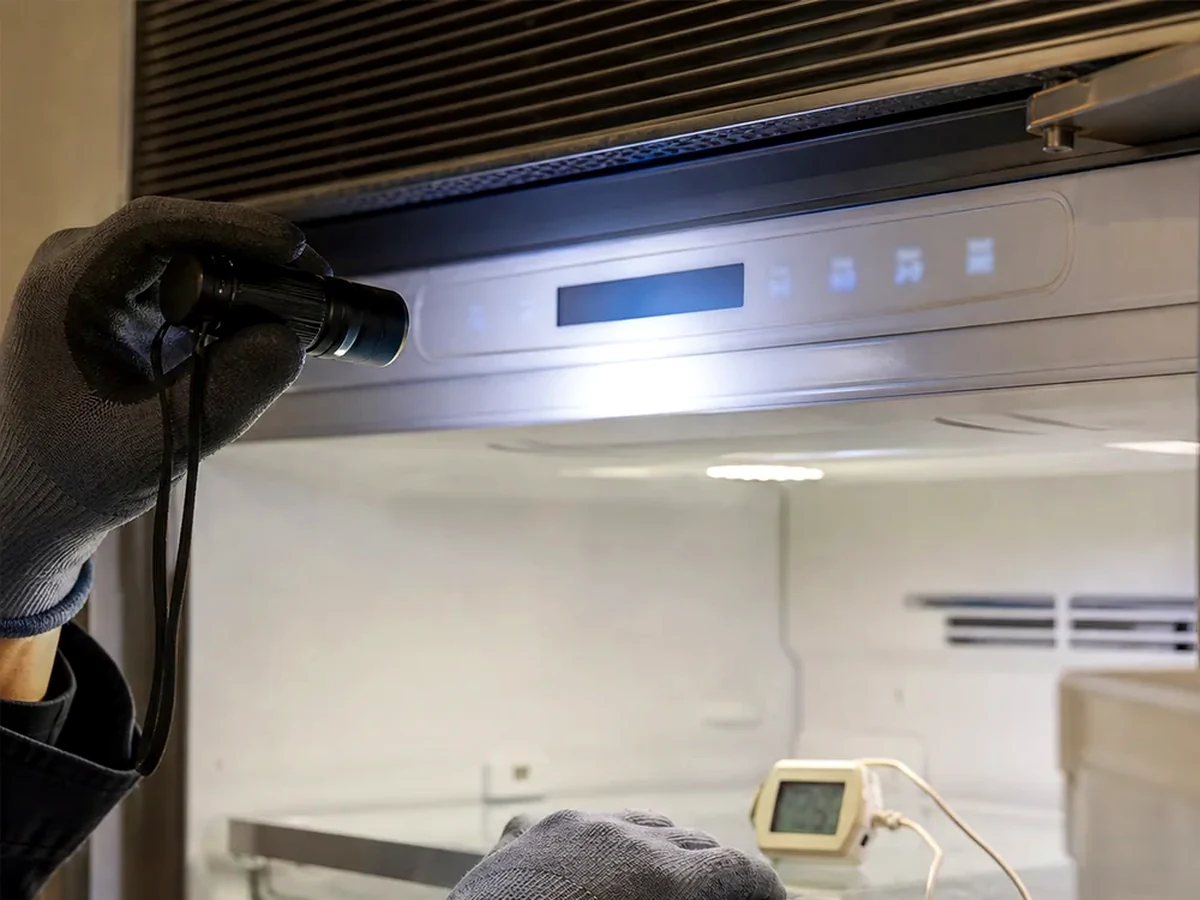
It's one of the more common Wolf cooking calls we get from Belmont kitchens: a wall oven or range that browns too fast, or leaves the center underdone, even though the dial reads the right number. The owner's first fear is usually an expensive control board.
It almost never is. Here's what's actually going on, and the order we work through it.
Wolf ovens hold temperature tightly, but they drift over years of use, and a 25-to-35-degree offset is enough to throw off a careful bake. The fix is usually a calibration adjustment, not a part — we put an independent probe in the cavity, compare it against the displayed setpoint, and dial the offset back to true. Many "my oven is broken" calls end right here.
If the offset won't hold, or the swing is wild rather than steady, the oven's temperature sensor is the next suspect. A sensor reading slightly out tells the control to over- or under-fire, and the result feels exactly like a miscalibrated oven. It's a bounded, well-stocked part on Wolf units and a clean replacement once we've confirmed it with the probe.
The reason we measure first is simple: a control board swap on a guess is the most expensive way to fix a problem that was really a $0 calibration or a single sensor. On a Wolf — a cooking appliance, the sister brand to Sub-Zero refrigeration — the readings almost always point somewhere cheaper than the owner feared. The $89 diagnostic goes toward the repair, so you're paying for the answer, not a guess.
Some models allow a small offset adjustment from the control, but without an oven-grade probe you're guessing at the true cavity temperature. We measure it so the correction is real rather than a second source of error.
No. Wolf builds cooking equipment — ranges, ovens and cooktops. The built-in refrigeration is its sister brand, Sub-Zero, which we also service.
Why a Sub-Zero 700-series undercounter drawer runs warm or frosts up in Belmont — airflow, gasket, or evaporator fan — and what each repair really costs.
Read the guide →Is your Belmont Sub-Zero built-in worth fixing? Compare real repair costs against replacement, the age and model math, and get an honest, no-pressure diagnosis.
Read the guide →A Sub-Zero wine column that drifts warm or loses its second zone has a short list of usual causes. A Belmont guide to dual-zone faults, the sealed system, and repair vs. replace.
Read the guide →Have the model number and the failing compartment ready and you will get a clear first opinion. Same-day service is available when route capacity and parts allow.