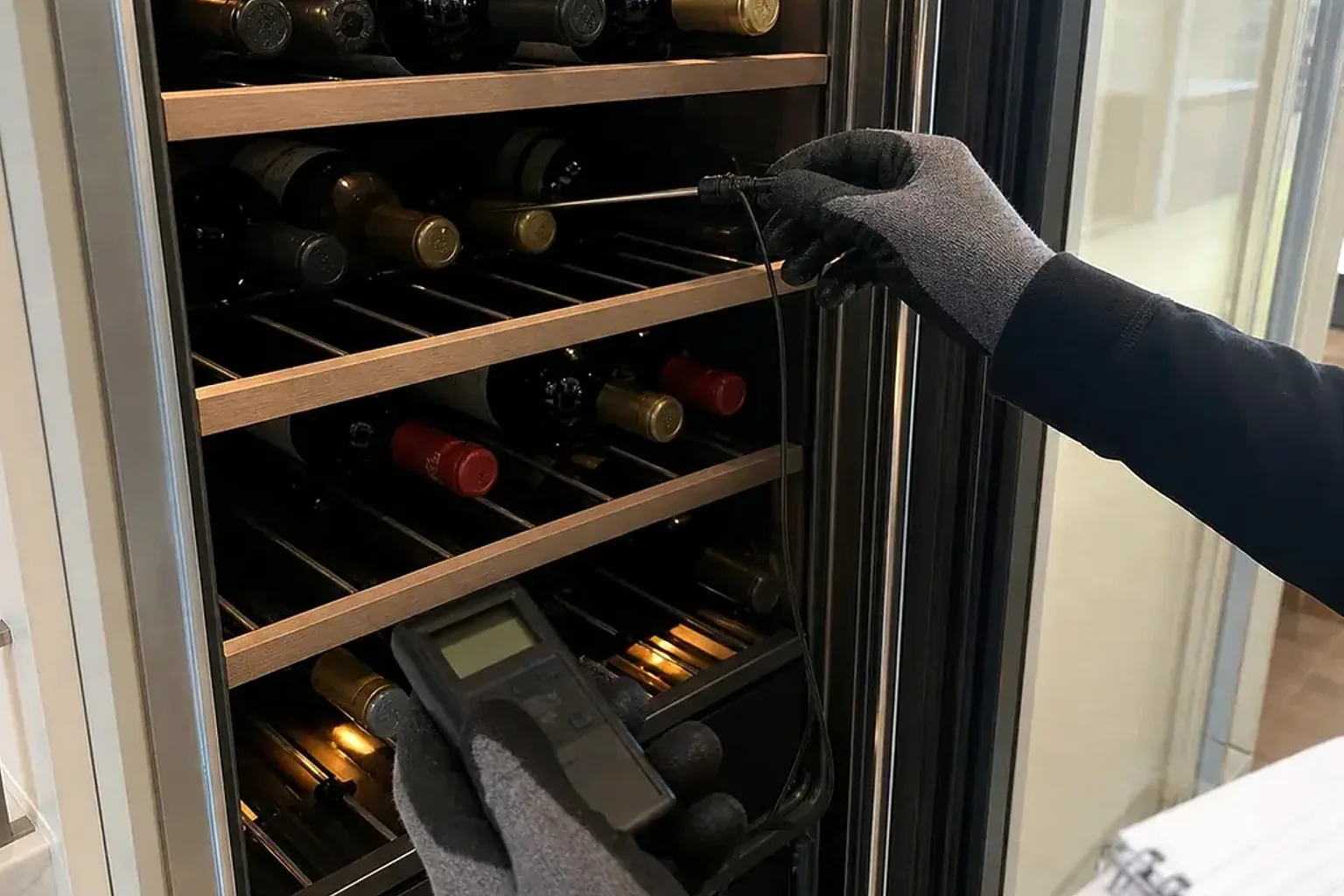
When a 600-series Sub-Zero starts to falter, the question is rarely just what broke. It is whether a built-in that has run for two decades is still worth fixing, or whether the money is better spent on a replacement. In Belmont that decision carries real weight, because these are not countertop refrigerators you swap in an afternoon.
This guide walks through the honest math: what a repair tends to cost, what a full replacement really runs once cabinetry is counted, and how the age and model of your unit tip the scale. We will also flag the few situations where replacing genuinely wins, so you are not talked into a repair that only delays the inevitable. The goal is a clear-eyed call, not a sales pitch for either answer.
Why This Question Lands on Belmont Kitchens Now
A lot of Belmont's built-in Sub-Zeros went in during the Carlmont and Hallmark hillside rebuilds of the early 2000s, which means a wave of 600-series columns and side-by-sides is now fifteen to twenty years old. That is exactly the window where the first big repair bill arrives and owners start asking whether to keep pouring money in.
These units were expensive when new and set into custom millwork, so the stakes are higher than a typical fridge. A hillside kitchen above Water Dog Lake was designed around that exact cabinet opening, and that fact shapes the whole decision before a single part is priced.
Belmont saw a distinct building surge in those years, and the appliances chosen then were premium built-ins meant to anchor the kitchen for a generation. Now that generation of hardware is aging in lockstep, which is why the repair-or-replace question is surfacing on so many local kitchens at once rather than one at a time.
What Replacing a Built-In Really Costs
The sticker on a new Sub-Zero built-in is only the start. A comparable column or side-by-side runs well into five figures, and that is before installation. Because these units sit flush in custom cabinetry, a new model often needs panel work, filler adjustments, or a resized opening to fit.
On a Belmont hillside home, add the access problem: getting an old unit out and a heavy new one in through tight stairs and narrow doorways is its own line item. By the time delivery, install, and cabinetry touch-up are counted, a swap that sounded simple becomes a multi-week, multi-thousand-dollar project.
What Most Sub-Zero Repairs Actually Run
Against that backdrop, repair costs look very different. A worn condenser fan, a failed defrost heater, a tired evaporator fan, or a control board are common on aging units, and each lands in the low-to-mid hundreds installed. Even several of those together stay far below a replacement.
The number that changes the math is a sealed-system fix, such as a compressor or a refrigerant leak, which reaches into four figures. That single repair type is usually the dividing line, and knowing which category your fault falls into is the whole game.
The Age and Model Math
A good rule of thumb: a well-kept Sub-Zero built-in is designed to run twenty years or more, and the cabinet, doors, and drawers often outlast the mechanical parts by a wide margin. If your unit is under fifteen and the repair is not sealed-system, fixing it is almost always the smart money.
Once a 600-series unit passes twenty and needs a compressor, the calculus shifts. Even then, replacement is not automatic, because a sound cabinet with a fresh sealed system can deliver another decade for a fraction of a new install. Age matters, but the specific failure matters more.
Repairs Worth Making, and the One to Pause On
Most of what fails on these refrigerators is worth fixing without a second thought: fans, heaters, gaskets, thermostats, boards, and ice makers are all bounded, predictable repairs on a cabinet built to last. Replacing them restores a unit that would cost many times more to swap wholesale.
The repair to pause on is a major sealed-system failure on a very old unit. When a compressor goes at twenty-plus years, that is the moment to weigh a real number against a real number. Even here we lay out both paths and let the cabinet's condition and your plans for the home guide the choice.
How Belmont's Hills and Flats Change the Call
Where the unit lives in town matters more than people expect. In the Sterling Downs flats near US-101, damp Bay air and the wet-season marine layer load the condenser and the defrost system harder, so those units tend to see the bounded, worth-fixing repairs first.
Up in the Carlmont and Belmont Heights hillsides, the bigger factor is access. A costly replacement means maneuvering a heavy built-in through hillside stairs, which pushes the balance further toward repair whenever the fault is a fixable one. The right answer in the flats can differ from the right answer two ridges up.
How We Help You Decide, Without a Sales Pitch
As an independent Belmont shop, we do not sell new refrigerators, so we have no reason to steer you toward a replacement. We diagnose the exact fault, quote the repair plainly, and tell you honestly when a unit has reached the end of sensible spending.
Our service call is 89 dollars, and it is credited toward the repair if you go ahead, so a professional diagnosis costs little to get the real numbers in front of you. Whether the answer is a same-week fix or a candid nudge to replace, you leave with a clear decision rather than a guess.