
Sub-Zero Repair vs. Replace in Belmont: Is Your Built-In Worth Fixing?
Is your Belmont Sub-Zero built-in worth fixing? Compare real repair costs against replacement, the age and model math, and get an honest, no-pressure diagnosis.
Read the guide →Drawer Units · 7 min read
Why a Sub-Zero 700-series undercounter drawer runs warm or frosts up in Belmont — airflow, gasket, or evaporator fan — and what each repair really costs.
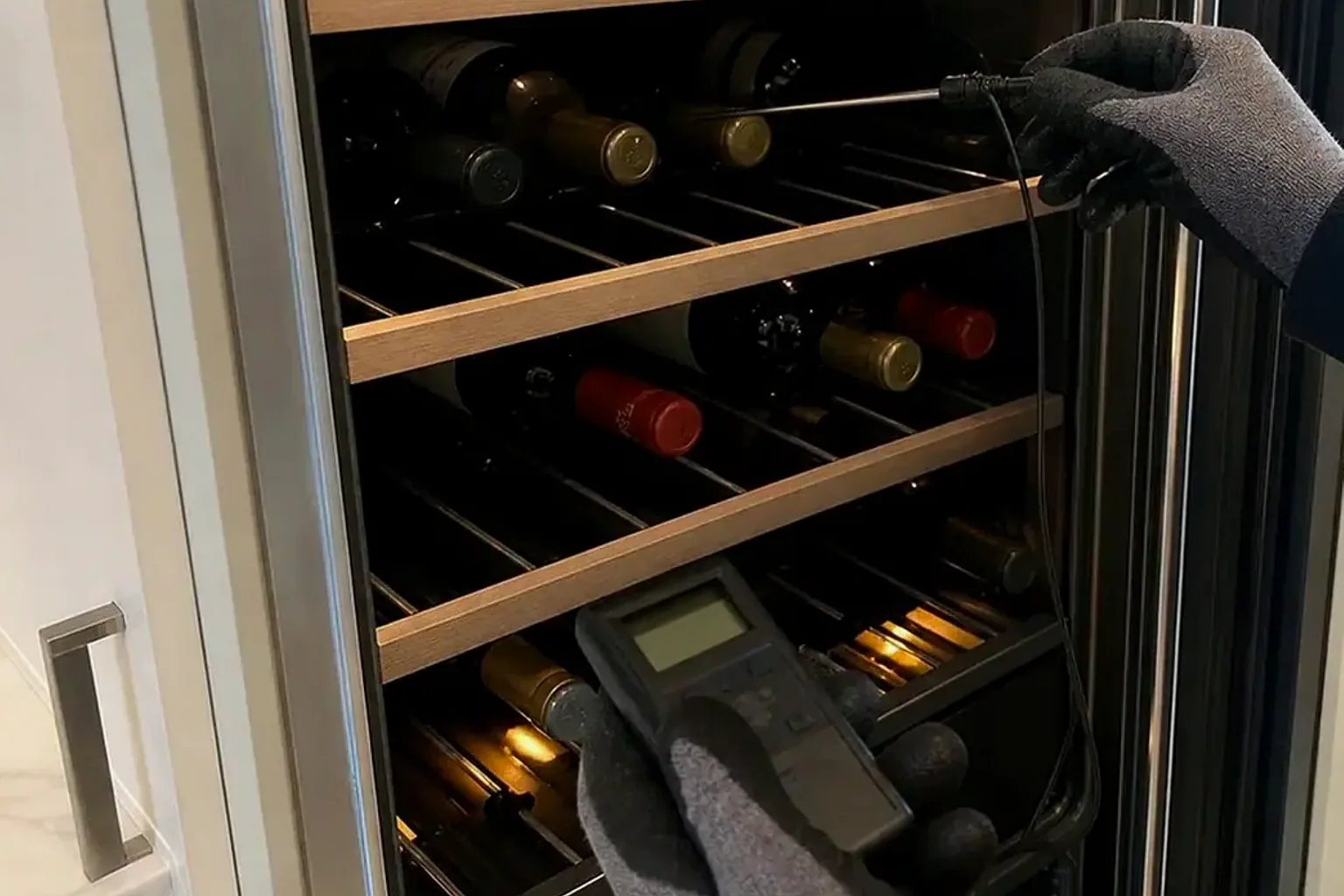
A Sub-Zero 700-series undercounter drawer that runs warm or frosts up in a Belmont kitchen is, nine times out of ten, a $190 to $790 fix — not the $1,250-to-$3,600 sealed-system failure many owners fear. Restricted airflow from an overpacked drawer, a worn drawer gasket, or a failing evaporator fan explains most warm-drawer calls across the 94002 hillside neighborhoods. These compact drawer units share a small sealed system that behaves differently from a full Sub-Zero column, so an identical warm-food symptom can point to very different parts. Belmont Sub-Zero Repair wrote this guide to separate the drawer myths from what actually fails, what each path tends to cost, and when a warm drawer is genuinely worth a same-week service visit rather than another weekend of rearranging groceries.
Owners often assume a warm Sub-Zero drawer means the compressor has died, yet a humming compressor rules that out almost immediately. The 700-series drawer moves cold air through a narrow evaporator channel, and that channel is easy to choke. Packing the drawer wall-to-wall — tall bottles, foil trays, a cake box shoved to the back — blocks the return vents and starves the cold-air loop, so the food nearest the front warms first. Belmont's hillside kitchens make this worse, because cabinets built into a sloped wall often trap heat behind the unit, and a drawer that gets no breathing room from cramped cabinetry cannot shed that heat load. A worn drawer gasket is the second culprit; once the perimeter seal hardens or tears, room air leaks in along the top edge, frost forms on the coldest surface, and the compressor runs long without ever reaching setpoint. Third comes the evaporator fan — when that small fan slows or seizes, the sealed system keeps making cold, but nothing pushes it into the drawer, so ice builds at the coil while the food stays warm. None of those three faults is the compressor, and none requires opening the refrigerant circuit. A quick field test tells them apart: clear the drawer, wipe the gasket, and listen for the fan behind the rear panel. Should the drawer recover overnight with less inside, airflow was the whole story; persistent frost at one corner points at the gasket, and a silent evaporator compartment points squarely at the fan motor.
Overpacking gets blamed for nearly every warm Sub-Zero drawer, and half the time that blame is misplaced. Reality splits along a simple line: a drawer that recovers within a day of being thinned out had an airflow problem, while one that stays warm no matter how empty has a hardware fault. Belmont Sub-Zero Repair sees the evaporator fan behind a large share of the 'I emptied it and nothing changed' calls. That fan lives behind the rear panel of the drawer cavity, and its bearings wear, its blade ices over, or its motor windings weaken with age. Frost that keeps returning to the same coil after a full defrost is the tell — the sealed system is fine, but the air that should carry that cold into the drawer is no longer moving. A tired drawer gasket produces a different pattern: uneven frost along one edge, condensation on the panel, and a compressor that never seems to rest. Neither the fan nor the gasket is a sealed-system repair, and treating either as one is how owners get quoted for work they do not need. The myth worth retiring is that a warm Sub-Zero drawer always signals an expensive refrigerant job. Genuine sealed-system faults — a failing compressor or a slow refrigerant leak — do exist, but they show up as a compartment that cannot hold any cold at all, confirmed only after pressure and service-mode evidence, and never guessed from a single warm produce drawer. Sorting airflow from fan from gasket first is what keeps a Belmont drawer repair honest.
Pricing for a warm or frosting Sub-Zero drawer in Belmont tracks the failed part, not the panic. A diagnostic visit carries an $89 fee that is credited toward the repair once you approve it, so the visit pays for itself on any real fix. A worn drawer gasket, sourced by cabinet width, fit, hinge and reveal check, lands at $285 to $640. An evaporator fan motor, matched by serial and verified against airflow and temperature, runs $310 to $640. A temperature sensor or thermistor, confirmed by serial and a control-response test, sits lower at $190 to $430, while a full control board — programmed and verified by serial — reaches $470 to $1,150. Only a genuine sealed-system failure, meaning EPA refrigerant work on a compressor or leak after pressure proof, climbs to $1,250 to $3,600, and that path is confirmed with evidence rather than assumed at the door. Belmont's hillside installs can add a safe-removal line when a drawer must be pulled and reseated with floor and panel protection, roughly $200 to $600, because a unit boxed into sloped cabinetry takes care to slide out without scratching a custom face. Honest math for most 94002 owners reads like this: the majority of warm-drawer calls settle in the $190-to-$790 range, and the four-figure sealed-system quote is the exception, not the rule. Knowing which band your symptom falls in before the technician arrives keeps the conversation grounded.
Running a frosting Sub-Zero drawer for a few days rarely harms the unit, but it does waste energy and risks the food inside. A drawer that holds above 40 degrees is no longer safe for raw meat or dairy, so move perishables to the main refrigerator until a technician verifies the temperature. Pulling the drawer's contents down to half also buys time, because less mass gives the weakened airflow a fighting chance, and an owner can often tell overnight whether the problem was load or hardware. Do not chip at the frost with anything metal — a gouged evaporator on a 700-series drawer turns a fan-or-gasket repair into a sealed-system one, and that is the single most expensive mistake seen in Belmont kitchens. Leave the drawer closed as much as possible, since every open cycle in a warm compartment invites humid room air that freezes onto the coil and deepens the frost. Should the compressor run non-stop while the drawer keeps climbing, unplugging the unit overnight to defrost fully and then restarting it is a reasonable stopgap, and a drawer that recovers cleanly after that defrost confirms an airflow or fan issue rather than a dead sealed system. What you should not do is keep topping off a failing drawer with more groceries in the hope it catches up, because a starved evaporator only falls further behind. Booking the diagnostic while the symptom is still mild gives the technician a clean picture and usually keeps the repair inside the lower price bands.
No. A warm 700-series drawer with a humming compressor is almost always airflow, a worn gasket, or a failing evaporator fan — a $190-to-$790 range — not a sealed-system compressor failure, which is confirmed by pressure proof rather than assumed.
Thin the drawer to half and wait overnight. Recovery means airflow was the cause; a drawer that stays warm while empty points to the evaporator fan or gasket, both hardware repairs rather than a loading habit you can fix yourself.
No. Move raw meat and dairy to your main refrigerator once the drawer holds above 40 degrees. Keep the drawer closed, avoid metal frost-chipping, and book service before a mild fault cascades into a costlier sealed-system repair. Belmont Sub-Zero Repair handles this locally — call (650) 995-5526.
Is your Belmont Sub-Zero built-in worth fixing? Compare real repair costs against replacement, the age and model math, and get an honest, no-pressure diagnosis.
Read the guide →A Sub-Zero wine column that drifts warm or loses its second zone has a short list of usual causes. A Belmont guide to dual-zone faults, the sealed system, and repair vs. replace.
Read the guide →From the Carlmont and Hallmark hillsides down to Sterling Downs near 101, where you live in Belmont shapes how a built-in Sub-Zero ages — and the visit.
Read the guide →Have the model number and the failing compartment ready and you will get a clear first opinion. Same-day service is available when route capacity and parts allow.
Our under-counter Sub-Zero drawer kept frosting up and warming the cheeses. Tom traced it to the evaporator fan, not the compressor we were dreading, and the price stayed in the range he quoted on the phone. Cold and quiet again.
Turned out we were overpacking the drawer and the gasket had also gone hard. Honest visit — he showed me the airflow issue instead of upselling a refrigerant job. Credited the service fee toward the gasket work.
Good diagnosis on our warm freezer drawer and the fan replacement fixed it. Part had to be ordered so it took a second visit, which is the only reason for four stars. Clear pricing and no pressure otherwise.
Hillside kitchen, tight cabinet, and the drawer would not hold temperature. He protected the floor and custom panel, pulled the unit, and found a worn seal. Reseated it clean. Exactly the careful work you want near a custom face.
Drawer was running above 40 and I panicked about the food. Tom talked me through moving perishables and booked me fast. Ended up being a thermistor, on the low end of what he'd described. Grateful for the straight answers.
| Most likely cause | Restricted airflow, a worn drawer gasket, or a failing evaporator fan |
|---|---|
| Typical repair range | $190 to $790 for most warm-drawer faults |
| Diagnostic fee | $89, credited toward the repair |
| Food-safety threshold | Move perishables once the drawer holds above 40 degrees |
| Same-day service | Belmont Sub-Zero Repair — (650) 995-5526 |
Need this handled? Sub-Zero Repair Cost in Belmont 94002 — 2026 Price Bands · Sub-Zero Door Gasket and Cabinet Seal Repair in Belmont